All Categories
Featured
Table of Contents
Offshore outsourcing gives business access to larger skill pools and lower expenses, making it a strong choice for specialized work or 24/7 assistance. Here's what it uses and where additional attention may be needed. Lots of offshore call centers are situated in areas with well-established outsourcing sectors, using access to large skill swimming pools.
Depending on where your organization is based, offshore destinations may offer more comprehensive access to specialized talent throughout a large range of functions. Offshoring likewise supports constant progress by working throughout different time zones. Tasks can be handed off from one group to another, helping work progress beyond standard organization hours.
Lastly, the cost benefit stays a crucial factor organizations turn to offshore companies. For numerous companies, lower wage expectations in particular offshore regions permit them to scale faster and handle larger workloads without jeopardizing expense efficiency. This makes offshore outsourcing a strong fit for companies concentrated on long-lasting development and budget-conscious preparation.
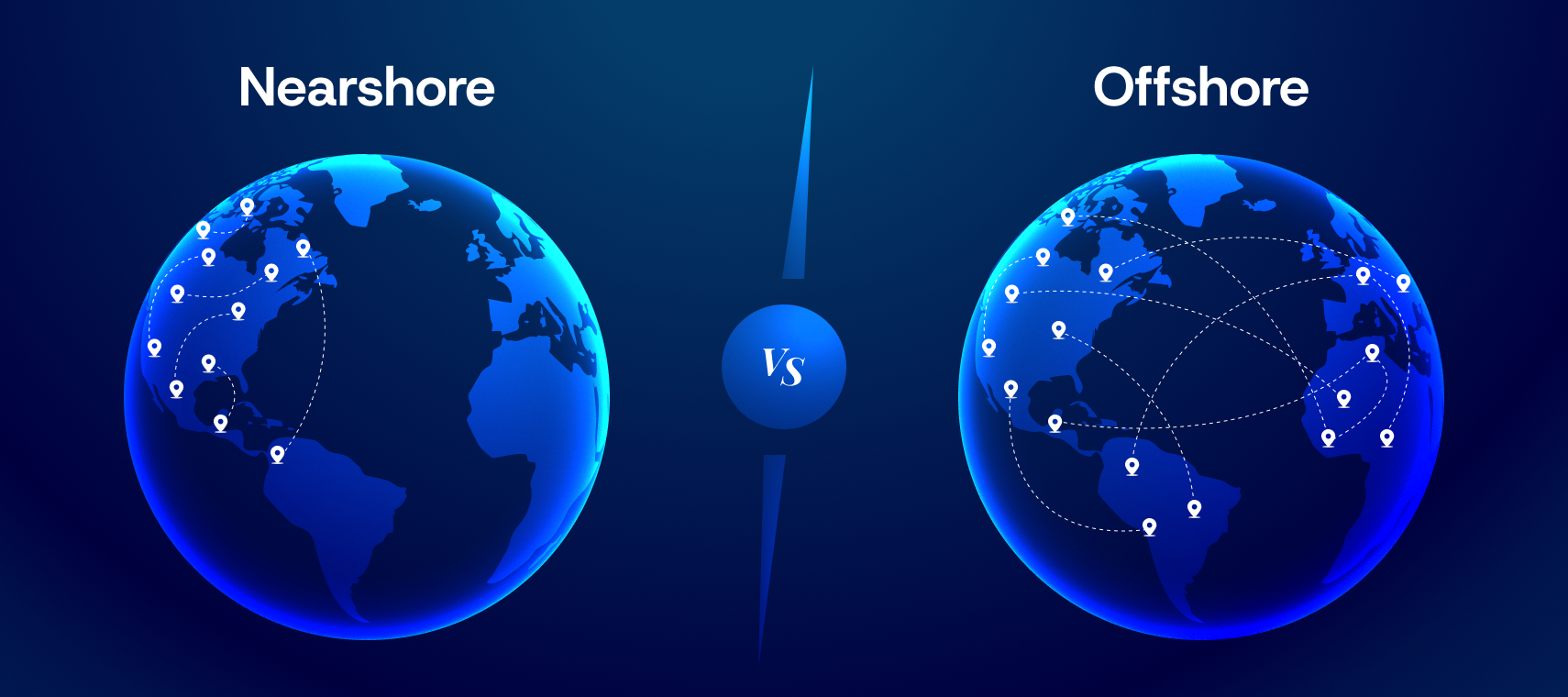
Working throughout time zone differences has the opportunity to slow interaction when live collaboration is required. Without distinct processes or expectations during partner selection, these delays can lead to slower approvals or misalignment on job updates. There might likewise be cultural barriers that affect how feedback is managed or how questions are raised.
That stated, offshoring remains a strong alternative when work is stable and clearly scoped. With structured onboarding and strong task management with a reliable partner, offshore outsourcing can assist companies meet budget goals and keep operations performing at scale. The best outsourcing technique depends upon the sort of work being done.

Essential Business Growth Roadmaps Across the Global Markets
In addition, some industries benefit from close cooperation and quick feedback, while others focus on scale and cost savings. The following tips provide high-level assistance on nearshore and offshore outsourcing by industry, with specific solutions and suggestions offered for companies based in the U.S. Software application contracting out involves hiring external teams to design, construct, or assistance digital products.
Navigating Global Labor Laws for GCC ExpansionNearshore software advancement teams often collaborate in real time, getting involved in nimble planning and live feedback sessions. Areas like Mexico, Colombia, and Costa Rica have ended up being common nearshore hubs due to time zone positioning and strong technical skill. This design supports faster problem resolution and mid-sprint pivots, making it ideal for nimble workflows.
Offshore software development regularly depends on asynchronous workflows, with groups offering structured updates around time zone distinctions. Destinations like Vietnam and Ukraine are a few of the best countries to contract out software application advancement, using access to large swimming pools of skilled software engineers at lower expenses. This makes them appealing for long-lasting or massive projects.
Customer care outsourcing is when companies employ external groups to assist consumers through phone, chat, e-mail, or social networks. These groups help solve problems and enhance reaction times. Nearshore consumer support teams are frequently chosen for their ability to supply responsive service during shared organization hours. Locations like the Dominican Republic and El Salvador use a mix of cultural familiarity and strong English efficiency, which helps them excel in service functions.
Hourly expenses may be higher than overseas options, but the interaction ease can be worth the compromise for real-time assistance. Offshore client support is built for scale and effectiveness, with teams dealing with high call volumes and offering extended or 24/7 schedule. Offshore places such as Pakistan and Indonesia are emerging gamers in this space, using competitive rates and growing service infrastructures.
Understanding Global Workforce Laws Shifts in 2026
Business Process Outsourcing (BPO) is when business outsource functional jobs like information entry or HR services. Nearshore BPO groups frequently deal with complicated workflows that need documentation accuracy or regulative awareness.
The compromise is a higher cost per seat compared to overseas groups, and occasionally, smaller team accessibility. Offshore BPO companies are popular for handling high-volume, rules-based tasks effectively. Nations like Morocco and Ethiopia are expanding their roles in this space, offering trained groups and competitive rates for work like claims consumption and invoice processing.
Digital marketing outsourcing is when business work with external teams to support brand growth and project execution. Nearshore creative groups are a strong fit for marketing work that depends on quick feedback and cultural positioning.
Compliance Proven Strategies When Implementing Offshore Labor Laws
These teams can align more easily on brand name voice and delve into planning sessions with minimal delay. While costs may fall between onshore and offshore alternatives, many business pick nearshore partners for the ability to stay in sync throughout the innovative procedure. Offshore marketing groups are frequently used to produce large volumes of digital possessions effectively.

Latest Posts
Maximizing Process Optimization Through Global Hubs
Key Tips for Managing Enterprise Capability Centers
Next Phase of the GCC America Strategy in 2026